12 Degrees South

Billy, Kate & Will in Perú

  • Home
  • About Us
  • How Can I Help?
  • Instagram
  • Contact

photo

The Business Trip

Posted on Monday, December 12, 2011 Leave a Comment

About a month ago while I was scanning my Facebook news feed, I noticed that a few of my friends had mentioned that they were away on “business trips”. I love to travel and the idea of being able to travel with work always enticed me. I know it would be work, but the adventure of going somewhere always sounded great. While reading the wonderful places my friends were jetting off to, like London, San Francisco, Venice and Washington DC, I found myself wanting to trade places with them and go myself. But after a few minutes, I didn’t think much more about it.

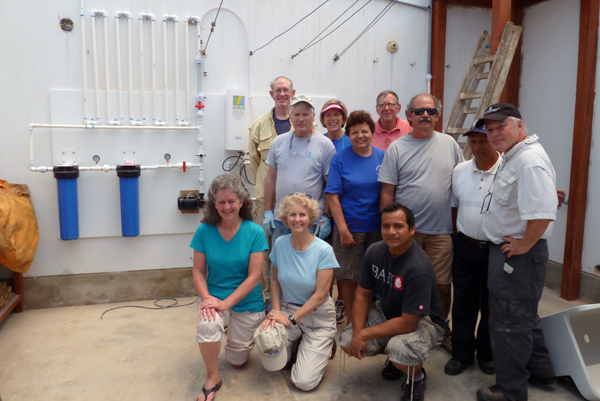
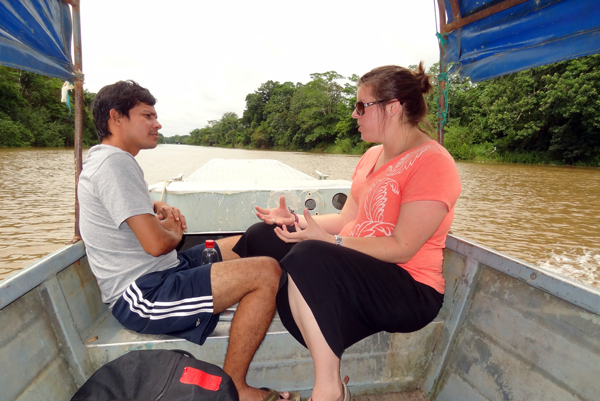
A couple nights ago, I returned from spending almost the past two weeks on the road. Starting in Kawai, our property located 88km south of Lima on the Pacific Ocean, I helped a water filtration team from Tennessee install a system on the property. Kawai and I have a long history since it is the location that I visited on my first trip in 2001, and then kept returning to for the 7 years with a group from First Presbyterian. It is a beautiful piece of beach front property with lots of green grass, palm trees and wonderful people. After a few days in Kawai and another couple days in Lima, we boarded a plane to head north to Iquitos and our boys home at Puerto Alegria. The water team had an installation planned for a church in the district of Punchana (just outside Iquitos) and wanted to perform some maintenance on their system at Puerto Alegria. Since the team spoke little Spanish, and part of their program includes teaching about the importance of using clean, purified water and how to properly and effectively wash your hands, I went with them to help teach.

Working with the children a church in Punchana.

The Living Waters team with their install at Kawai.

After spending a couple weeks with the group, it was time to return home. As packed up my suitcase and boarded the plane to Lima, I couldn’t help thinking, “Why would I be so silly and want to trade places with my business traveling friends?!” They get to go to neat places and travel with work, but hey – so do I! They go to cities where they only know work colleagues, stay in impersonal hotels and just work all day. But when I travel with work, I go to work with friends, stay in their homes and not just “work” all day, but get to have fun. Lots of fun.

I get to see people like Jherry, our house father and director of the home in Puerto Alegria.

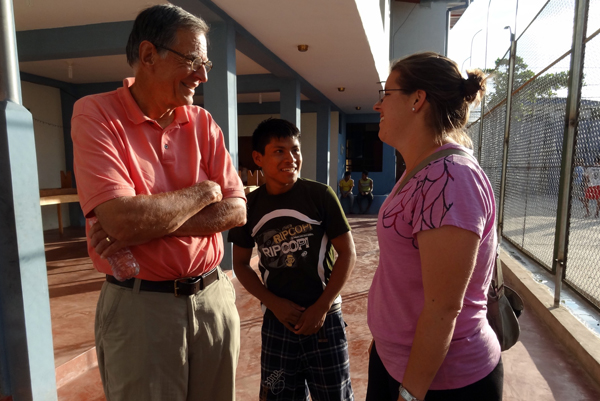
I get to spend time with people like Wixler, who I have known for many years.

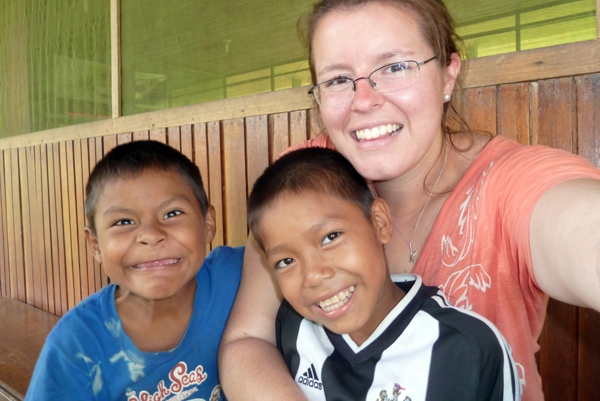
And, I get to take silly photos with silly boys. (Thank you Luis for that photobomb…)

So, even though I’m not going off to the same wonderful places I dreamed of as a child, I’m going to familiar places – to where people know me and I know them; to people who greet me with open arms and to a job that is never completed.

And all of that is just fine with me.

Posted in: Peru | Tagged: Girasoles, Kawai, Peru, photo, Puerto Alegria, Scripture Union

Building Bridges

Posted on Saturday, November 19, 2011 Leave a Comment

Every year, Scripture Union Peru partners with a non-profit health organization in the States called Health Bridges International. Based in Portland, Oregon, HBI facilitates sustainable improvements in people’s health through collaboration with established resources.

Focusing their efforts on the people of Peru, HBI exists to build bridges between people and services in an effort to provide the most critical needs to those living in impoverished and underserved areas.

For the past 15 years, HBI has been working in partnership with SU Peru to host free medical campaigns in underserved areas of the country – typically where one of our Girasoles homes for abandoned boys exist. They send a team of volunteers from both the United States and Peru, made up of doctors, dentists, nurses, medical students and assistants to spend 1 week putting on an intense medical and dental campaign. And, if needed, each doctor/dentist is paired with a Spanish-English translator.
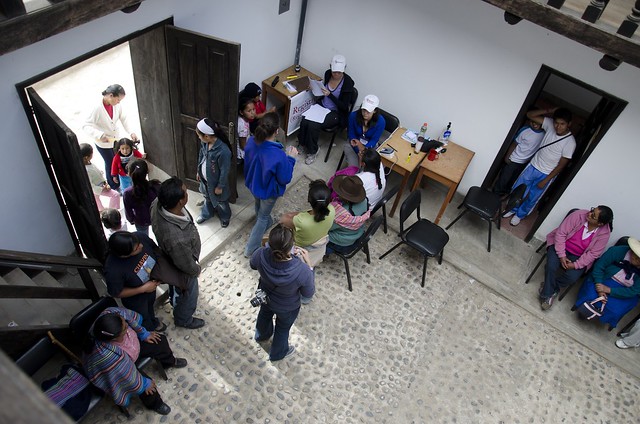
Registration & Triage

This year, they came to Kusi. A part of the goal for the trip was to host a free medical and dental clinic not only on the SU property in Kusi, but to also a location in the community. We spent 2 days at an already established medical post in the small town of Musho and the final 3 days at Kusi.

I don’t think I can even begin to put the experiences from the week into words. During the 5 days of clinics, the team of 6 doctors and 2 dentists saw approximately 675 patients, and the pharmacy filled approximately 1750 prescriptions.
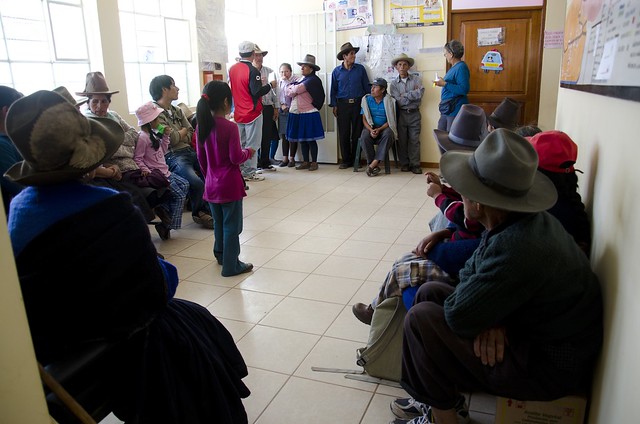
Waiting Room

In an effort to minimize confusion for the patients and HBI team, the clinic process is extremely streamlined. Every patient that comes to see a doctor or dentist has a registration form filled out with vitals and a brief medical history, and then is ushered into a waiting room.

During the week, I was paired with Dr. Martin, a DO student from Portland. The majority of the people we saw had severe shoulder, back and waist pain that was caused from years of working in the fields or improperly lifting heavy items, or carrying heavy packages on their backs.
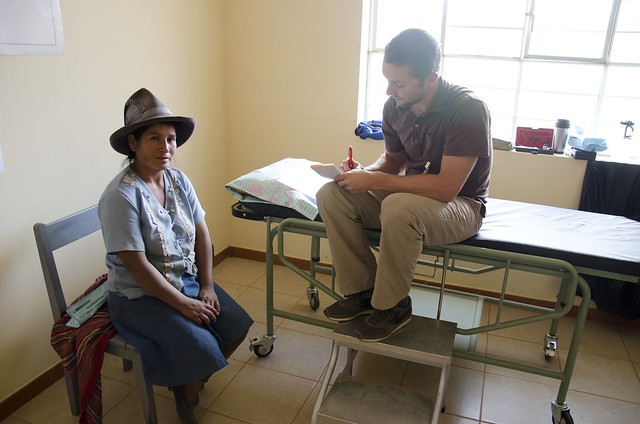
Dr. Martin

And, we were given the occasional child for a well-child exam, which were particularly fun.
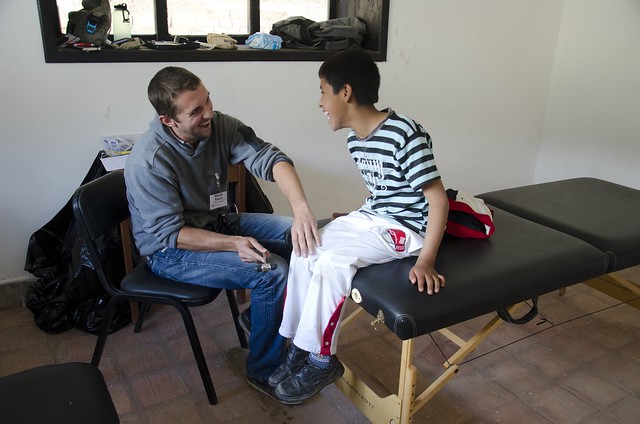
Dr. Martin

Coming from high up in the mountains, we frequently encountered patients that barely spoke Spanish, but communicated in Quechua. When we had a Quechua-only patient, Dr. Martin and I relied on the help from a Quechua-Spanish speaker. Thankfully, there were a few helpers (including a few of the Girasoles boys!) that were able to help. It was quite the sight to see Dr. Martin explaining to me in English, I turn and explain in Spanish to Edwin (one of the Girasoles Quechua speakers in the green sweatshirt) and then Edwin explain in Quechua to the patient.
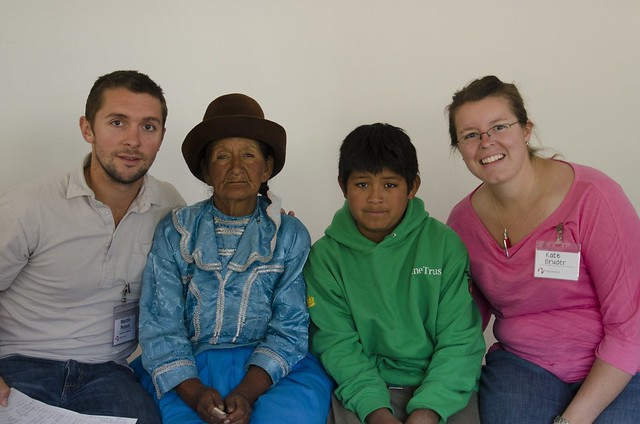
English - Spanish - Quechua

At the end of our second (and last) day in Musho, we were given a patient named Alejo. Alejo is 62 years old and lives in Parillentana. Not knowing all of the small towns around the area, I asked Alejo where Parillentana is located. He said, “not that far, just over that way” while pointing out the window. After more probing, he eventually said that he walked 30 minutes along dusty, unpaved roads to reach the clinic.

Thirty minutes doesn’t sound like that far of a walk, but it clearly was quite the accomplishment for Alejo. The first thing we noticed about him was that he had severe cataracts in one of his eyes, and he said that he was completely blind in the other. He moved very slowly and required the assistance of a walking stick. He also had lost 3 fingers on his right hand and walked slightly hunched over.

Not being able to fix his every need, Dr. Martin started on what he could do, and helped Alejo relax and stretch out his very tight muscles. The whole time Dr. Martin was working, Alejo was telling me about his life. He has never been married, has no children, and lives alone but a nephew lives close by. Since he has poor vision and mobility, he cannot work in the fields like everybody else and relies on the help of his nephew and family to survive.

Despite his circumstances and the evident fear and worry that he experienced from not being able to work and earn money, Alejo was very thankful. Like many of the patients, he thanked Dr. Martin and me numerous times for the help. But greater than that, Alejo was thankful for his life and the simple joys, despite his situation. I saw this thanksgiving in many of our patients, both in Musho and Kusi.

A couple days later, after Dr. Martin finished examining an older woman, she burst into tears. When she was finally able to speak, she thanked us profusely for helping her. She didn’t have money to go to the nearby, very-basic health post, and even though she wasn’t going to be cured today, she was extremely thankful that somebody talked with her, listened to her concerns, and gave her some form of help.

In some situations like this woman, through the partnerships HBI has developed over the years, we were able to provide referrals to local Peruvian doctors or medical programs. The point of the week wasn’t to drop into Musho or Kusi and provide as much free medical and dental care as possible and never return. In this particular trip, the team did see and help many patients, but the goal was to build a bridge between the patient and the medical care that already exists in the Musho and Kusi area, and even as far as Lima.

Through compassion, empowerment and collaboration (with organizations like SU Peru), Health Bridges International is making a difference in communities here in Peru.

Want to see more? More photographs from the clinics in Musho and Kusi can be found on Flickr.

For more information about the work of Health Bridges International, visit their website I am the Bridge.

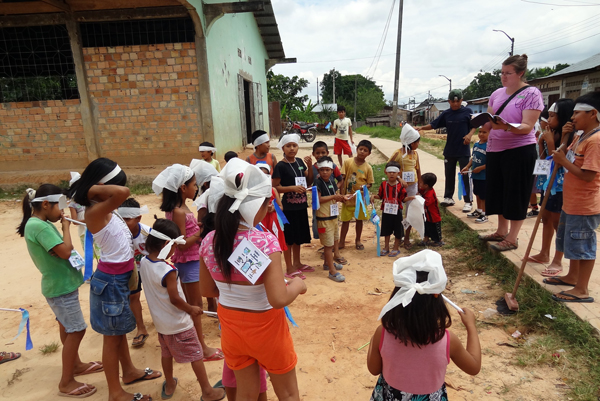
Posted in: Peru | Tagged: HBI, Kusi, Musho, Peru, photo, Scripture Union

Water

Posted on Friday, September 16, 2011 3 Comments

This past weekend, I spent some time with a group from England at our home for abandoned boys in Ica. Part of their trip to Ica was not just to spend some time with the staff and boys living at the home, but also to venture out into the surrounding community and share with our neighbors.

The city of Ica is located approximately 5 hours south of Lima, in the Atacama Desert. The Atacama is considered to be the driest desert in the world. There are no flies because there is nothing for them to eat. There are locations where not a single drop of rain has been recorded by humans, and dry river beds that have had no water running through them for 120,000 years. But yet, many cities and shanty-towns have been established here.

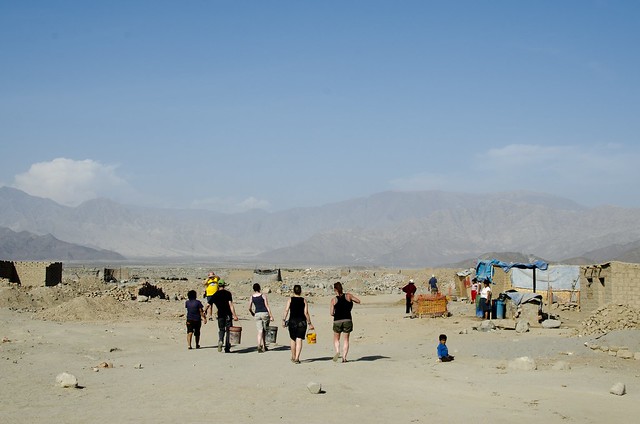
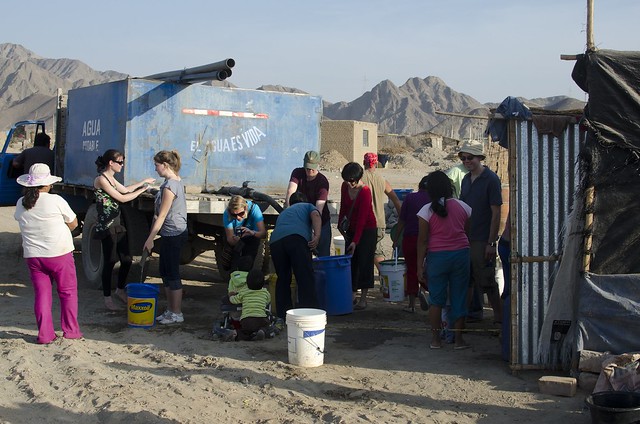
Our groups that visit Ica have the opportunity to share water in a shanty town not far outside the city of Ica, just 15 minutes from our home, in the district of La Tinguiña.

Delivering water in Ica.

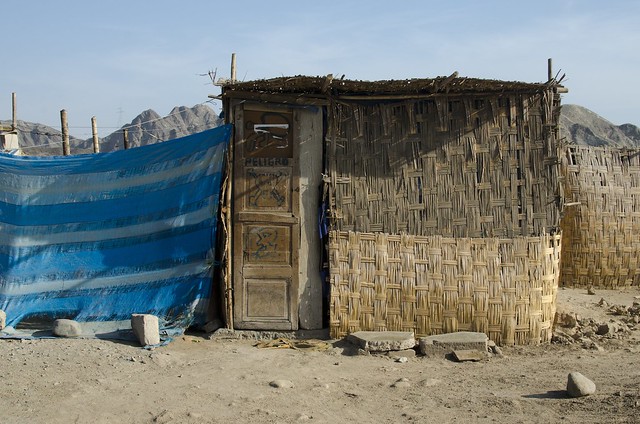
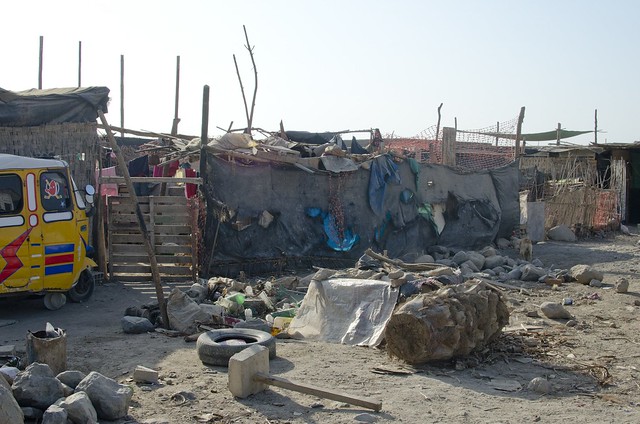
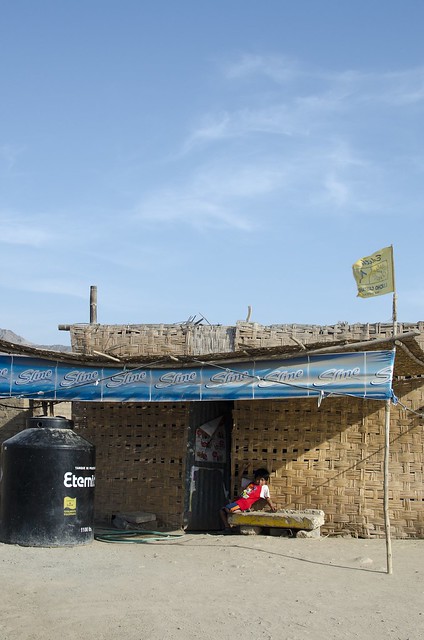
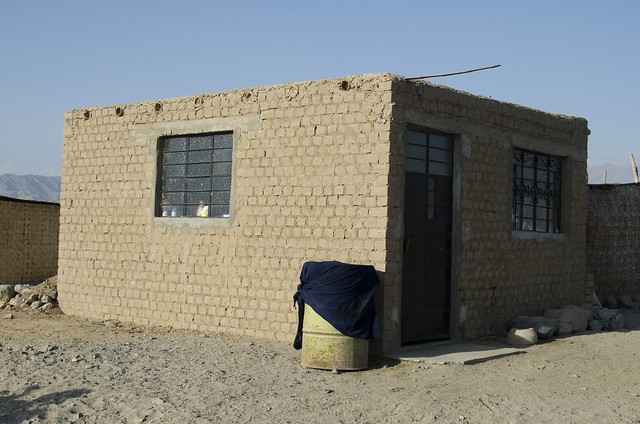
The area is characterized by low cost, unstable houses built with plywood, sheets of plastic, cardboard or any available material, but little by little, more homes made of bricks are starting to appear. They tend to be irregular structures good enough to protect from the summer sun. The homes lack clean water, sanitation, and usually electricity. Many are built on land without a permit. There are very few official roads and “house numbers” tend to be more descriptive, rather than an actual number.

Straw mat house

One of the homes.

I’ve made this trip dozens of times with work teams and groups from my own church. Each time, you meet different people or go a slightly different route, but the need is the same. The people in this area need clean drinking water to live.

Delivering water in Ica.

Since there were many hands helping carry the full water buckets back to their owners, I took advantage of the opportunity to talk to some of the people that were out in the street, asking about their water needs. Many people in the area use a majority of their income just on water. In Peru, the legal minimum wage is S/. 600 monthly (or $219.62 USD a month), but I suspect that most people in this particular area are earning their income “off the books” and not necessarily earning a full S/. 600.

So how much does water cost? Once a month, the government provides free water to the people in La Tinguiña. If a family of 4 is lucky to have an above ground well or tank, this water will last about a week. The other three weeks out of the month, they have to buy their own water. Water that is being used to bathe, wash, cook and clean.

The large black tank costs about S/. 15, and lasts about a week. ($5.49 USD)
Straw mat house

The 55-gallon drum outside of this house costs about S/. 3 to fill ($1.09 USD).
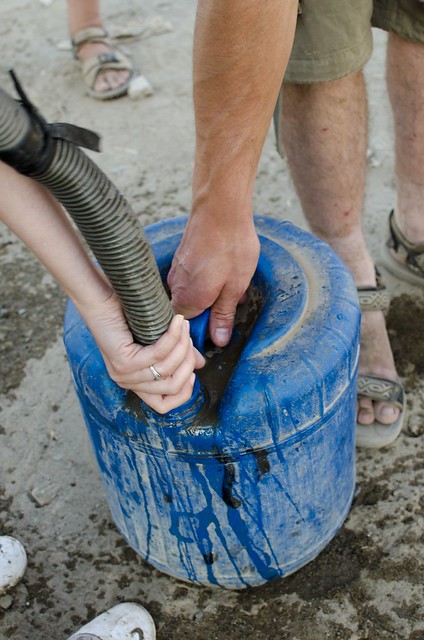
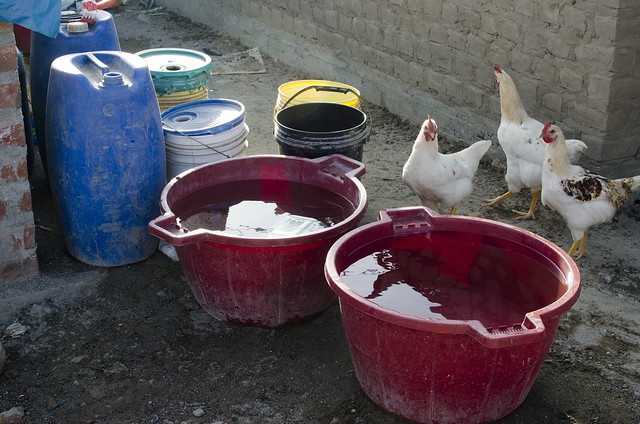
Water storage.

Each of these buckets or tubs cost about .50 centimos to fill (0.18 USD)
Water storage.

To freely provide this basic need to our neighbors in La Tinguiña, we rent a truck and fill it with water. The better part of an afternoon is spent walking through the dusty streets of La Tinguiña calling out “Agua! Agua! Necesitas agua?”

The truck rental, the driver’s time and 7000 liters of water costs S/. 100 ($36.60 USD)
Delivering water in Ica.

But our work does not end here. While we satisfied the need of physical water, there is still the need for spiritual water. We know that God pours his spirit into us, filling us with the living, eternal water (John 4:13-14). Or, that while the physical water can run out and our tongues are parched, God does not abandon us (Isaiah 41:17). I was encouraged to hear some of the people that received our free water thanking God for the gift, and one even saying that God had answered her prayer. I pray that the others in this area will discover the living water and have the same reaction the next time.

We simply cannot survive on one or the other.

Posted in: Peru | Tagged: Ica, Peru, photo, Scripture Union, Tinguiña, water

Mistura 2011

Posted on Wednesday, September 14, 2011 Leave a Comment

How did we see a presidential candidate, the queen of anticuchos and a famous dessert chef all in one afternoon?

All this week, Lima is hosting the 4th annual food fair downtown at the Parque de la Exposición. Simply calling this a food fair is not enough – it is truly an international gastronomic party. Founded 4 years ago by a famous Peruvian chef, Gastón Acurio, in Mistura has become the largest food fair in Latin America. It’s not just a festival of food – but more of a party where Peruvians and foreigners from various regions gather together to celebrate the traditional Peruvian cuisine to reaffirm the Peruvian identity and celebrate it’s cultural diversity.

Over the centuries, food has been associated with fiesta. For local holidays and festivals, such as Inti Raymi in Cusco, and San Juan in Iquitos, Christmas, Easter and family celebrations (weddings, birthdays, christenings) dishes are prepared using the traditional techniques and recipes that have been passed down from generation to generation. This is the spirit that dominates Mistura.

The fair brings together farmers, producers, cooks, bakers, restaurants, cooking schools, food processing companies and everything in between. Divided into types of food and regions, three, four and five star restaurants and distributed throughout the park alongside food carts and street vendors. All of the participants have to be invited to participate, and are considered the best of the best. In addition, an area of the park is devoted to a grand market, where visitors have the opportunity to buy products directly from the farmer and sometimes, products that they would not be able to get locally.

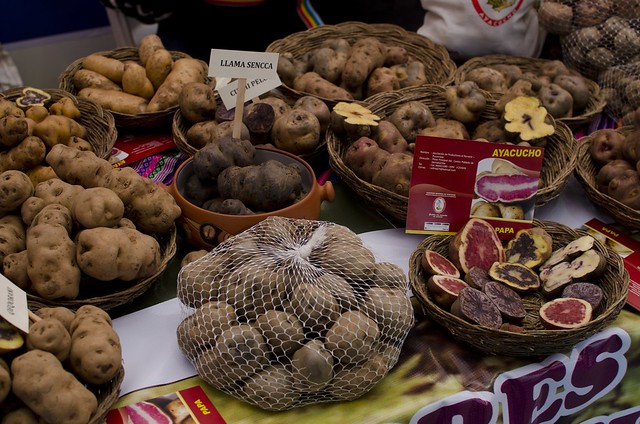
Having a free day, Billy and I decided to take advantage of everything Mistura has to offer. We spent the better part of a day wandering around the park, sampling dishes from around the country of Peru, learning about the types of pisco and the 2,000+ types of potatoes grown here, and basically just trying as much as we possibly could. And, we even managed to run into a few famous types – Pedro Pablo Kuczynski, a presidential candidate from the recent election, the Doña Grimanesa Vargas, the queen of anticuchos (she sells them on the street corner to hundreds and hundreds of people waiting each night), and Astrid Gutsche, the famous dessert chef.

Just a few of the 2,000+ varieties of potatoes that are native to Peru.
Potatoes

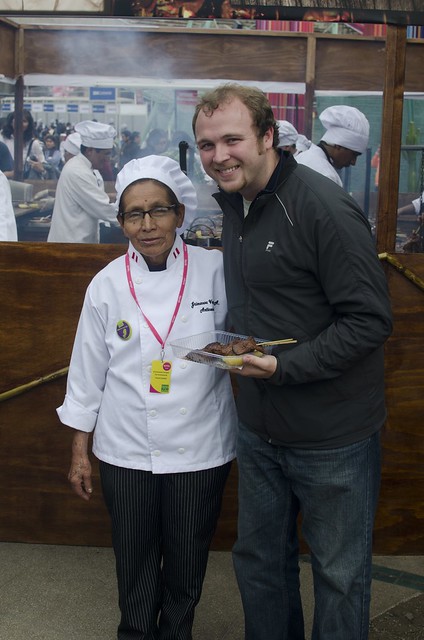
Billy and the famous Doña Grimanesa. She sells her anticuchos on the street corner to hundreds and hundreds of people each night. They line up for hours waiting to buy her anticuchos.
Billy and Doña Grimanesa

Trying Doña Grimanesa’s famous anticuchos – which are made from cow heart.
Anticuchos

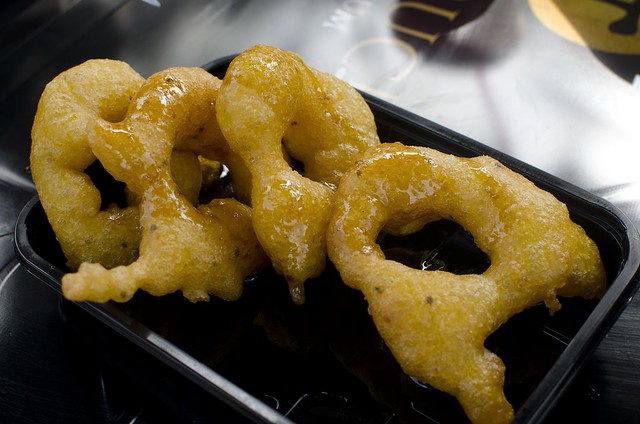
Picarones, the Peruvian version of the doughnut and absolutely delicious.
Dish #5

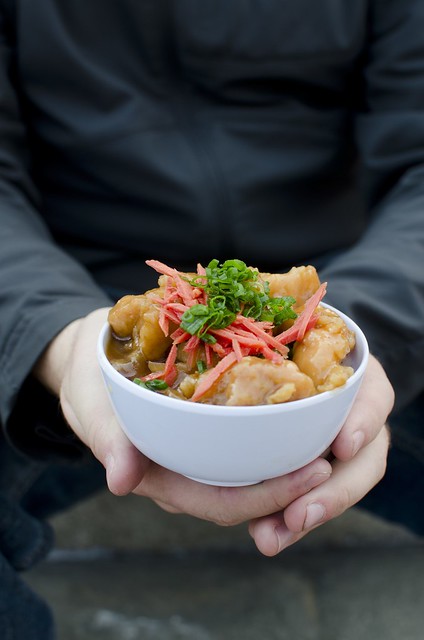
One of the best dishes, donburi, which was from the Rincon Japón.
Dish #7

Billy and me at the end of the day.
Mistura 2011

Want to see more photos from Mistura? They are on Flickr.

Posted in: Peru | Tagged: Lima, Mistura, Peru, photo

Jacobo

Posted on Thursday, August 18, 2011 1 Comment

Jacobo

Last week in Puerto Alegria, while I was sitting in the maloca (gazebo) down by the river, Jacobo wandered down to join me. He was carrying a book with him that a volunteer had left a few weeks earlier, Curious George. Seeing me sitting there in a hammock, he asked me if I wanted to read the book with him. Before I had a chance to say yes, he climbed into the hammock with me and opened the book to read about the mischievous little monkey and his friend with the yellow hat.

Jacobo came to our home in Puerto Alegria in February of this year through the medical ministry SU operates here in Iquitos. His path to Puerto Alegria is by no means the typical way our boys arrive to the house, but the situation he came from is representative of many.

At the end of January, a team of medical volunteers from the United Kingdom, the Peruvian medical staff and SU staff (including Billy) were working on the medical boat, Amazon Hope 1, providing medical and dental care to villages along the rivers in the Amazon jungle.

Near the end of their 10-day tour, they arrived in the village of Cochiquinas, close to the border of Peru and Brazil. A few minutes after they had docked the boat for the evening, a man approached and asked if the doctors could take an emergency appointment.

The man boarded the large medical boat with a frail boy in his arms. He explained that the boy had been out in the fields with his grandparents while they worked harvesting crops. While they were working, he had wandered away from the little hut he stayed at to go pick a ripe papaya he could see in a nearby tree. While standing at the tree, plotting how he would reach the papaya, a snake bit him between his toes on his left foot. Over the next 24 hours, with the help from his aunts and uncles, and various neighbors, Jacobo made the long journey back from the fields to his home in Cochiquinas, and into the care of a neighbor- the same man who brought Jacobo to the boat.

Immediately, the doctors on board began to treat him. The boat carries a large supply of medicines, including anti-venom medications. They were able to give him the medication, but could not guarantee that it would work since they need to be administered within 24 hours of being bit. By this time, 36 hours had already passed.

Over the next few hours, the medical team did the only thing they could do – keep Jacobo as comfortable as possible and pray for God to take care of him. Throughout the rest of the night, they did just that.

In the morning, things were looking much better for Jacobo as he received his second round of antibiotics. He had managed to sleep throughout the night, but was nowhere in the clear. He still needed more medical treatment. Upon finding out that his grandparents were unable to leave their work in the fields to come take care of their grandson, and with no legal guardian to take care of him, Jacobo remained on the Amazon Hope 1 medical boat. When the boat returned to Iquitos, Jacobo was brought to Puerto Alegria – our home for abandoned boys outside of the city.

Jacobo

After Curious George had saved the day yet again, I gave Jacobo a hug and we swung in the hammock discussing the book. He had never heard of Curious George and thought it was funny that a monkey lived in a house and rode a bicycle.

Jacobo, who didn’t know his birthday, age or last name, now has the opportunity to attend school, play with the other 46 boys at the home and learn about God and His awesome powers while at Puerto Alegria. He is a walking miracle and quite a testament to what God is able to do.

Posted in: Peru | Tagged: Girasoles, Jacobo, Peru, photo, Puerto Alegria, Scripture Union
« Previous 1 … 4 5 6 … 13 Next »

Subscribe to our updates

katebruder

Traveler. Spanish speaker. Michigan native✋🏻. Peruvian citizen 🇵🇪. 📍Lima, Perú

[late post] May have been chastised for taking a p [late post] May have been chastised for taking a photo on the sidewalk in front of the embassy last month but thankful for the opportunity to participate in free and fair elections while overseas. I only wish the ballot drop off hours had been longer so Will could have come with us 🗳️✉️
Thankful for a church that loves its kids, generou Thankful for a church that loves its kids, generously invests in them and shares that the light shines in the darkness, and the darkness has not overcome it. 

@caminodevida @kidscdv #fundayfestcdv
A visit to the Palacio de la Moneda in Santiago 🇨🇱 A visit to the Palacio de la Moneda in Santiago 🇨🇱 

#littlewilliamnoah
Spring break trip to Santiago, Chile 🇨🇱 A dear fri Spring break trip to Santiago, Chile 🇨🇱 A dear friend has been working in Santiago and thanks to some great points redemptions for flights and hotel, we made the trip to see her and explore a new city and country. We were amazed at the differences between Santiago and Lima (amazing public transportation! open spaces and greenery!) and loved spending time with @minazavala 😘
Spent the morning in Callao for a track meet. Will Spent the morning in Callao for a track meet. Will competed with the San Borja team in 4 races in the U8 group (50 meters, 200 meters, 4x50 meter mixed relay and 5x50 meter boys relay) and earned a medal in every race. We love watching him have fun and see how his hard work in practice pays off! 🥇🥈🥉🥉 #littlewilliamnoah
Slow days and late summer evenings on the water wi Slow days and late summer evenings on the water with family 🐟☀️ 

#littlewilliamnoah
After 3 years, we finally enjoyed a glorious Michi After 3 years, we finally enjoyed a glorious Michigan summer for a few weeks doing all the outside things possible. Spent way too much time delayed at the Atlanta airport and not nearly enough time with family. 

#littlewilliamnoah
Your greatest contribution to the kingdom of God m Your greatest contribution to the kingdom of God may not be something you do but someone you raise. - Andy Stanley

Happy Father’s Day, Billy! The legacy you are creating for Will and the example you show him daily of how to be a father and husband is our greatest blessing. We love you. 

#littlewilliamnoah
Last night Will went to his first professional soc Last night Will went to his first professional soccer game, a friendly match between Perú 🇵🇪 and Paraguay 🇵🇾. Even though the game started after he normally goes to bed and ended in 0-0, he was so excited to cheer for @labicolor and loved it ☺️⚽️ #littlewilliamnoah
Follow on Instagram

Copyright © 2025 12 Degrees South.

Theme by Randall Bruder.