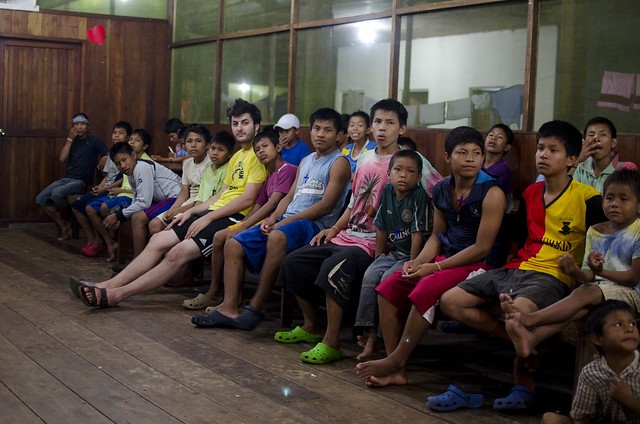
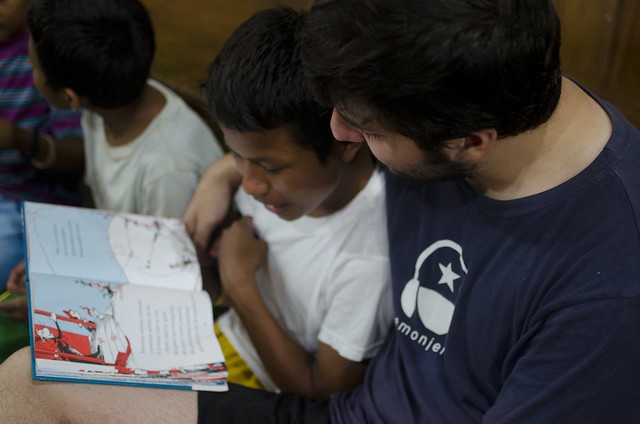
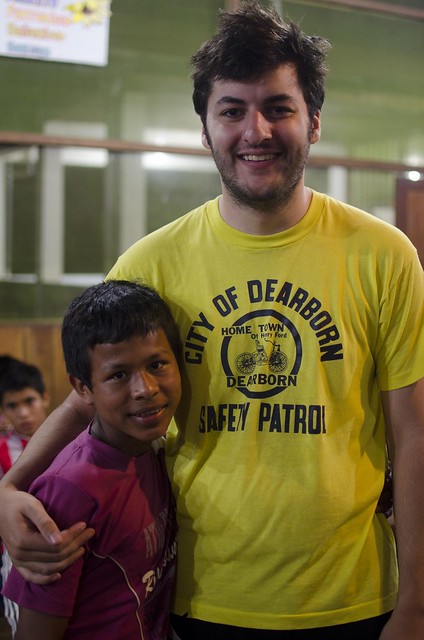
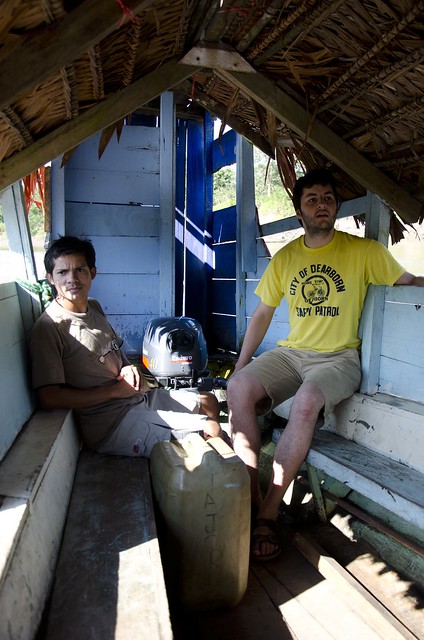
My younger brother, Randy, was able to spend the month of August here in Peru with me. As I was heading back to my apartment after leaving him at the airport on Friday night, I was thinking about all the things we did during the 24 days he was here…
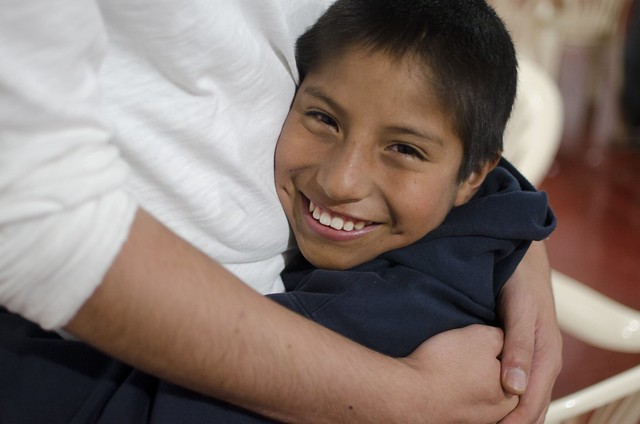
We spent a 11 days in the jungle at our home for abandoned boys, Puerto Alegria.
Randy learned how to drive the big boat back to Puerto Alegria.
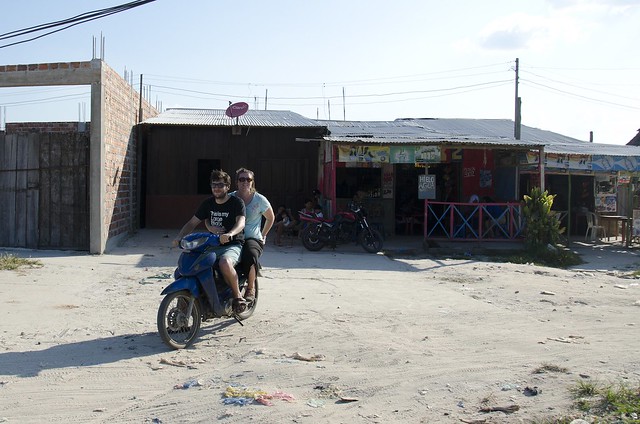
We learned how to drive a motorbike.
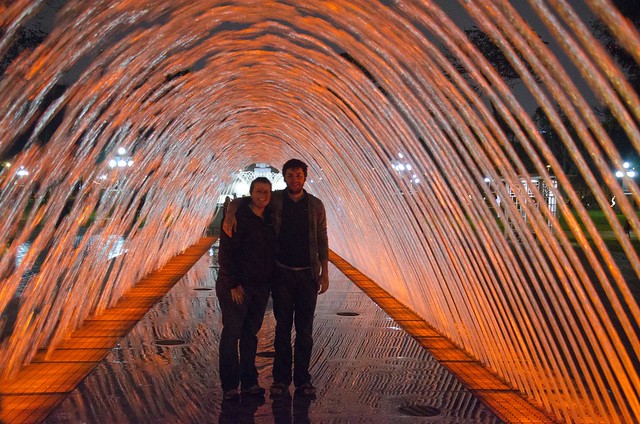
We spent the week in Lima.
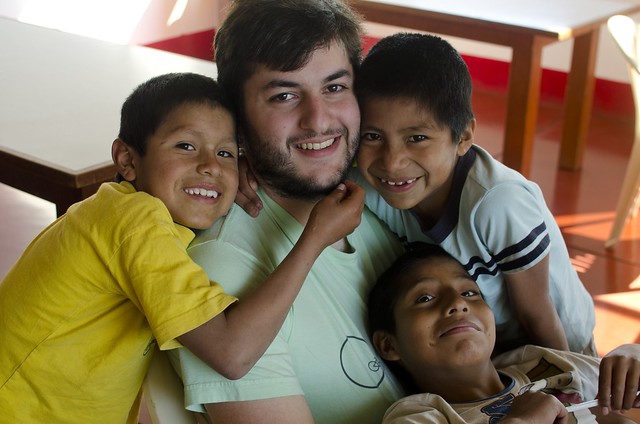
And, we visited friends at Girasoles Ica.
More photos from Randy’s month in Peru can be found on Flickr.
Happy Independence Day in Peru! Today, the country celebrates 189 years of independence from Spain.
The last few years, I have spent the 4th of July at the Casa Girasoles home in Ica with the group from my home church, First Presbyterian. Augusto, the house father in Ica, is very patriotic towards his country Peru, and every year tells me he feels honored to spend our Independence Day with us (the Dearborn group) in his home. In the three years I have known Augusto, never have I been able to share in his Independence Day, fiestas patrias, at the home in Ica. In 2008, I was in Cusco and last year, I was still working at the Girasoles abandoned boys home in Puerto Alegria.
This year, after leaving the jungle and returning to Lima, I headed south to the desert – partly to help adjust from the hot and humid jungle weather before going to the cold mountains, but mostly to see friends in Girasoles Ica. I arrived to Ica on Tuesday night, the day before the national holiday festivities began.
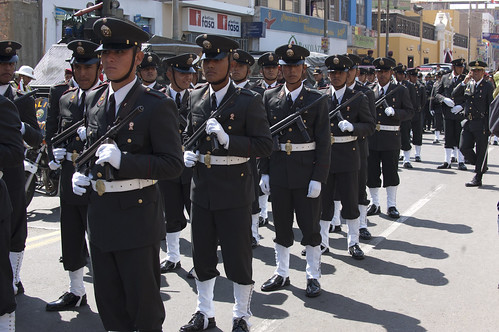
This morning at breakfast, I asked Augusto if anything special would be happening for the holiday and he mentioned the parade through the city center. We didn’t think much of it and were not planning on going, but we needed to run some errands and ended up walking along the parade, watching the local schools, army, police officers and every form of civil servant march through the streets of Ica. While this was not my first parade in Peru, it was definitely the most organized.
After the parade, we returned to Girasoles and found the boys humming and singing the chorus of the Peruvian national anthem (Somos libres seámoslo siempre, seámoslo siempre!”) and wearing their escarpelas in honor of the day.
As a sequel to the Mala Trip video my brother Randy made in 2008, here is the 2010 Ica version, starring the youngest members of the Dearborn team, Sarah, Brandon and Griffin.
In this video, Sarah, Brandon and Griffin take you on a ride through Ica to a market where they purchase various Peruvian candy bars to share with the 33 boys living in the abandoned boys home at Girasoles Ica and the children of First Presbyterian Dearborn.
In the past 24 hours, I have used 3 buses, 1 airplane, 2 taxis and 1 boat to make it from the Girasoles home in Ica all the way up to Iquitos and then, Puerto Alegria. This journey was not quite as exciting as the time I traveled on 5 buses, 1 airplane and 2 boats in 36 hours last year, but equally tiring and just as much traveling.
As my group from Dearborn prepared to return to the States, the last few days in Ica were busy with all of the things we wanted to do with the boys, Augusto and Nancy before leaving for the year.
On Saturday afternoon, our last full day at the home, Augusto, the house father, came to me at 3:30 in the afternoon and said, “Let’s all go to Huacachina and rent sand boards. I’ve called the bus driver and he will be here in 10 minutes to take us.” In good Peruvian fashion, we were out the door in 20 minutes and on our way to Huacachina, the nearby oasis in the desert, where the 40 boys and 15 team members would rent sand boards and slide down the huge sand dunes, inevitably covering themselves in sand. This completely unexpected adventure was a blast and was a great way to wrap up a fun week with the boys in Ica.
Sunday and Monday were consumed with traveling, and quickly blurred into just one long day. We left the home in Ica Sunday afternoon to make the 5 hour journey from Ica to Lima, where we went straight to the airport. The team was flying to Atlanta at midnight, and I was heading north to Iquitos the following morning on a 6am flight. Instead of getting into 2 more taxis and renting a hotel room for just a few hours, I elected to simply stay at the airport, which made for a sleepless night.
My flight, which was scheduled to leave at 6am, did not depart Lima until at 7:30, making my arrival into Iquitos at 9am. But, the journey was not over yet. I had to wait until noon for our boat to be ready with all of the supplies and groceries to take me to the home. Once they were ready to go, it was another 45 minutes before we made it to Puerto Alegria where I was greeted by 40 smiling faces, and a familiar work team from the Philadelphia area.
A unique opportunity work teams that visit Ica get to participate in is the sharing of clean, drinking water with an underserved area of the city. Each year, our group rents a truck, hires a driver and buys 10,000 liters of water to share with the people of Alta La Tinguiña, a shanty town neighborhood not too far from where our abandoned boys home is located – all for about $35.
For many people we encounter on the trip, this water is crucial, the difference between being healthy and ill. They can spend up to half of their income on water alone, and the truck does not come through these parts too frequently. The water they buy (or receive from us) is essential to their life and is used for cooking, drinking, bathing and cleaning.
In the States, we take water for granted. I know that every morning when I wake up, there will be water in the shower (hot water, not just water) and there will be clean water from the kitchen faucet. We water our lawns to make sure they don’t turn yellow in the excessive summer heat.
Last year during one of my visits to the medical clinic Scripture Union operates in Iquitos, one of the doctors told me that the majority of the patients they treat have parasites or illnesses that come from not using clean water to cook or drink. He said that if people would have access to clean water, they would not have as many health problems and it would help solve some of the problem.
We equate delivering this clean water as Jesus being the living water of our lives. Without Jesus, life is just more difficult, we might fall ill, or have complications, but with the living water running through us, all things are possible. When somebody thanks me as a gringa for filling their buckets with water, I let them know that it isn’t me giving them water, but God. Yes, I paid for the water, the truck rental, the driver, but I was given the ability to do so from God. And only from His blessing am I able to share with others what He has given me.